
The Last-Mile Challenge in Community Food Rescue
Discover how better timing, transport, storage, and coordination can turn surplus food into more completed pickups and greater hunger-relief impact.
Finding Surplus Food Is Only the First Step

A donated meal has value only when it reaches someone who can use it. That makes the last mile one of the most important challenges in community food rescue. A restaurant may have nutritious prepared food available, yet the donation can still fail if recipients do not see the listing in time, cannot reach the pickup location, or lack the storage needed to keep it safe. Unlike ordinary deliveries, surplus food often has a short shelf life and an unpredictable supply, leaving little room for delays.
The challenge is especially significant for community organizations serving households with limited transportation, changing schedules, or urgent food needs. A successful hunger-relief effort must coordinate several moving parts at once: accurate quantities, allergen information, pickup windows, transportation, volunteers, and clear handoff instructions. When any link breaks, food may be discarded again. Effective food rescue therefore depends not only on finding donations, but also on building a trusted process that makes completed pickups simple, timely, and safe for everyone involved.
Designing Reliable Pickups and Handoffs
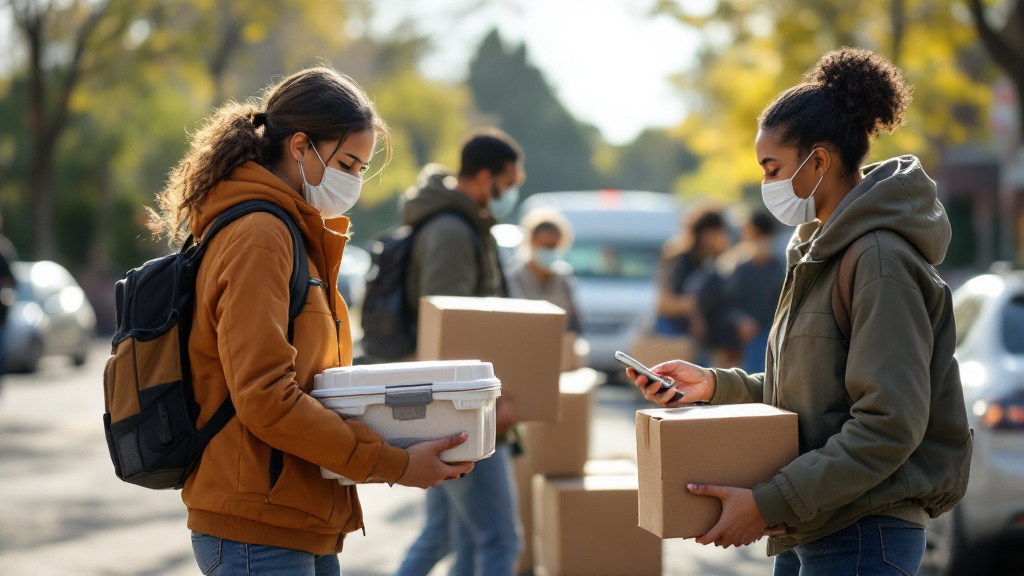
Communities can improve last-mile logistics by treating each donation as a coordinated, time-sensitive task. Listings should include the food type, quantity, allergens, storage conditions, photos, and a realistic pickup window. Approximate locations can protect privacy while still helping recipients judge travel time. Push notifications and clear in-app messaging can alert nearby households, volunteers, and community organizations as soon as food becomes available, while automatic expiration prevents outdated listings from creating confusion.
Transportation and storage planning matter just as much. Organizations can maintain volunteer availability lists, group pickups by neighborhood, and identify vehicles or insulated containers suited to the food being moved. A designated backup volunteer can reduce failures when someone cancels. At the handoff, both parties should confirm collection, review relevant safety details, and report problems promptly. Ratings and incident reporting can encourage accountability without making the process intimidating. These practical systems turn food rescue from an informal favor into a dependable community service that supports more completed pickups.
Turning Completed Pickups Into Measurable Impact

The strongest food-sharing programs measure more than the number of listings posted. They track completed pickups, portions or pounds recovered, response times, expiration rates, repeat participation, and the communities reached. These measures reveal where last-mile logistics are working and where support is needed. For example, repeated unclaimed listings may indicate an inconvenient pickup window, limited transit access, unclear instructions, or a gap between supply and local demand. Community organizations can use that information to adjust routes, recruit volunteers, or coordinate recurring donation schedules.
Technology can make this learning practical without replacing human relationships. A location-aware platform such as ShareBites can connect donors with nearby recipients, support messaging and reservations, and document successful handoffs for nonprofit or grant-funded reporting. The goal is not simply to move more food, but to make each exchange safer, more predictable, and more dignified. When communities plan for transportation, timing, storage, and backup coordination, food rescue becomes a reliable part of local hunger relief—and more surplus food reaches households instead of landfills.